
Business Music Licensing: Complete Guide
Learn how business music licensing works, why businesses need licensed music, and how to choose the right licensing solution for your industry, location, and operational needs.
August 5, 2026
Music plays an important role in shaping customer experiences across a wide range of commercial environments. Restaurants, cafés, retail stores, hotels, fitness clubs, salons, offices, and many other businesses use background music to create atmosphere, reinforce their brand, and make customers feel more comfortable.
For many business owners, adding music seems straightforward. Streaming services make millions of songs instantly accessible, playlists are easy to create, and connected speakers can fill an entire venue with just a few taps.
However, playing music in a commercial environment is fundamentally different from listening to music at home. Businesses need to consider how music is used, how it supports daily operations, and what licensing requirements may apply in their country.

Understanding business music licensing helps companies make informed decisions about the way they manage music, maintain consistent customer experiences, and support long-term business growth.
This guide explains what business music licensing is, why it matters, how commercial music differs from personal streaming services, how licensing generally works, and how businesses can choose the right music solution for their operational needs.
What Is Business Music Licensing?
Business music licensing refers to the use of music within commercial environments such as restaurants, cafés, retail stores, hotels, offices, fitness centers, salons, and other customer-facing businesses.
Unlike personal listening, commercial music becomes part of the overall customer experience. Whether customers are shopping, dining, exercising, or waiting for an appointment, the music contributes to how they perceive the business.
For this reason, businesses often need music solutions designed specifically for commercial use rather than platforms intended for personal entertainment.
Business music licensing is not simply about gaining access to songs. Modern business music platforms are designed to help companies manage music efficiently across one or many locations while supporting consistent customer experiences.
Depending on the business, music may serve many different purposes:
- create a welcoming atmosphere
- support brand identity
- encourage customers to stay longer
- improve the overall customer experience
- reduce uncomfortable silence
- support employee working environments
- create consistency across multiple locations
As businesses grow, music increasingly becomes part of daily operations rather than simply background entertainment. A single café may only require one playlist, while a hotel group or retail chain may need centralized control across dozens of locations.
This shift is one of the reasons specialized business music platforms have become increasingly popular. They combine music management with scheduling, centralized administration, playlist consistency, and other features designed specifically for commercial environments.
Why Businesses Need Music Licensing
Every customer notices atmosphere, even if they do not consciously think about it. Lighting, interior design, customer service, cleanliness, and music all work together to create a first impression.
Music influences how customers experience a business from the moment they walk through the door. The right soundtrack can make a space feel energetic, premium, relaxing, welcoming, or modern, depending on the business's goals.
While products and services remain the primary reason customers visit, atmosphere often influences how long they stay, how comfortable they feel, and whether they choose to return.
Music can support businesses in several ways:
- create emotional connections with customers
- strengthen brand positioning
- improve customer comfort
- support browsing and shopping experiences
- enhance hospitality environments
- create consistent experiences across locations
- improve workplace atmosphere for employees
Business owners often underestimate how much customers associate music with their overall perception of a brand. Two businesses offering similar products may create completely different experiences simply because their atmosphere feels different.
For example, a premium restaurant may use calm instrumental music to create an elegant dining experience. A boutique fitness studio may rely on energetic playlists that motivate members throughout the day. A luxury hotel may use different music in its lobby, spa, and restaurant to match the purpose of each space.
Music also contributes to operational consistency. Businesses with multiple locations often want customers to experience the same atmosphere regardless of which branch they visit. Without a structured music strategy, each location may develop its own playlists and create inconsistent brand experiences.

Modern business music platforms help solve this challenge by allowing organizations to manage music centrally while still giving individual locations flexibility where appropriate.
Businesses That Commonly Need Music Licensing
Almost any business that plays music where customers, visitors, guests, or clients can hear it should consider how music fits into its overall operations and the applicable licensing requirements in its market.
Although every industry uses music differently, the objective is usually the same: creating a better customer experience.
Restaurants
Restaurants use music to support the dining experience from the moment guests arrive until they leave. The style, tempo, and volume of music often change throughout the day to reflect breakfast, lunch, dinner, and evening service.
Fine dining restaurants typically prefer subtle background music that encourages conversation without becoming distracting. Casual restaurants may use more energetic playlists that contribute to a lively atmosphere.
Many restaurant groups also develop standardized music guidelines to ensure every location reflects the same brand identity.
Learn more about music for restaurants →
Cafés
Cafés often use relaxed playlists that encourage customers to spend more time enjoying coffee, working remotely, or meeting with friends. Music helps create a welcoming environment while supporting the café's overall personality.
Independent coffee shops frequently develop carefully curated playlists that become part of their identity. Customers may return not only for the coffee but also because they enjoy the atmosphere the business consistently creates.
Learn more about music for cafés →
Retail Stores
Retail businesses use music to reinforce brand positioning and influence the shopping environment. A luxury fashion boutique typically requires a different music strategy than a sports retailer or a supermarket.
Many retailers schedule different playlists throughout the day to match changing customer traffic, promotional campaigns, or seasonal collections.
As retail businesses expand into multiple locations, centralized music management becomes increasingly valuable for maintaining consistent customer experiences.
Learn more about music for retail stores →
Hotels
Hotels often manage multiple customer environments simultaneously. Lobby areas, restaurants, bars, wellness centers, meeting rooms, and lounges may all require different music styles while still reflecting one consistent brand identity.
Because guests interact with several areas during their stay, music helps create a seamless experience across the entire property.
Learn more about music for hotels →
Fitness Clubs and Gyms
Fitness businesses rely heavily on music to create energy, motivate members, and support different types of workouts. Cardio areas, strength training zones, studios, and recovery spaces may each benefit from different playlists and energy levels.
Scheduling music throughout the day also helps gyms adapt to changing customer demographics during morning, lunchtime, and evening sessions.
Learn more about music for gyms →
Salons, Spas, and Wellness Businesses
Beauty and wellness businesses typically prioritize calm, comfortable environments where customers can relax. Music supports the overall experience by reducing stress, creating privacy, and reinforcing premium service quality.
Many salons also adjust playlists depending on the time of day, customer demographics, and seasonal promotions while maintaining a consistent brand atmosphere.
Choosing the right music is only part of creating a great customer experience. Our Background Music for Business: Complete Guide explains how businesses use music to shape atmosphere, strengthen brand identity, and create effective music strategies across different industries.
What Happens If Music Isn't Managed Properly?
Many businesses begin with an informal approach to background music. A manager creates a playlist, an employee connects a phone to a speaker, and music simply becomes part of the daily routine.
While this approach may work temporarily for a small independent business, it often becomes difficult to manage as operations grow. Additional locations, new employees, longer opening hours, and changing customer expectations all increase the complexity of managing music consistently.
One of the most common challenges is inconsistency. Different employees may choose different playlists, adjust the volume throughout the day, or select music based on personal taste rather than the experience the business wants customers to have.
Over time, customers may receive very different impressions depending on when they visit or which location they enter.
Businesses also face operational challenges as they expand. A company operating multiple locations may discover that every branch has developed its own music strategy, making it difficult to maintain a recognizable brand experience.
Some locations may play energetic pop music, while others prefer relaxed acoustic playlists. Although each choice may seem reasonable on its own, together they can create an inconsistent customer journey that weakens brand identity.
Another challenge is administration. Without centralized management, managers often spend unnecessary time creating playlists, updating devices, changing music for seasonal promotions, or resolving day-to-day issues individually at each location.
Modern business music platforms help simplify these tasks by providing centralized control, scheduled playlists, and consistent management across one or many locations.
Rather than treating music as an isolated operational task, businesses increasingly view it as part of their overall customer experience strategy.
Business Music Licensing vs Personal Streaming Services
One of the most common questions business owners ask is whether they can simply use a personal streaming service inside their business.
Consumer streaming platforms have transformed personal listening by making millions of songs instantly available through smartphones, computers, tablets, and connected speakers. Because these services are familiar and affordable, they often become the first option businesses consider.
For a small business with simple music needs, a consumer streaming service may initially appear to be an easy solution. Staff already know how it works, playlists can be created quickly, and music can begin playing within minutes.
However, commercial environments often require more than simply accessing a large music catalog.
Businesses typically need solutions that support day-to-day operations rather than personal entertainment.
Common business requirements include:
- centralized playlist management
- consistent music across multiple locations
- scheduling playlists throughout the day
- remote administration
- staff permission controls
- support for commercial environments
- scalability as the business grows
As organizations expand, operational efficiency often becomes more important than the music library itself. A business with twenty locations is usually more concerned about maintaining a consistent customer experience than discovering new songs every day.
This is where dedicated business music platforms differ. Rather than focusing on individual listeners, they are designed around the operational needs of commercial environments.
If you'd like to explore this topic in more detail, read our comparison of Spotify vs Licensed Business Music.

How Business Music Licensing Works
Although licensing requirements differ between countries, the overall concept is relatively straightforward.
Businesses use music as part of the experience they provide to customers. Because music contributes to a commercial environment rather than private listening, companies often choose solutions designed specifically for business use.
Instead of managing multiple services independently, many organizations prefer a dedicated business music platform that combines licensed background music with practical management tools.
The exact process varies depending on the provider and local market, but it generally follows several steps.
Step 1. Identify Your Business Needs
Every business uses music differently.
A small café may require a single playlist throughout the day, while a hotel may need different music in its lobby, restaurant, spa, and meeting areas. A retail chain may need centralized management across dozens of stores.
Understanding these operational requirements helps businesses choose the right solution from the beginning.
Step 2. Choose a Business Music Solution
Business owners typically evaluate platforms based on several factors:
- ease of use
- music quality
- playlist variety
- commercial music support
- multi-location management
- scheduling capabilities
- scalability
- overall operational efficiency
The best solution is not necessarily the one with the largest music catalog. Instead, it is the platform that best supports the way the business operates every day.
Step 3. Create Music Strategies
Successful businesses rarely play the same playlist continuously.
Instead, they often develop different music strategies for different situations.
Morning playlists may create a calm and welcoming atmosphere, lunchtime music may become slightly more energetic, while evening playlists can match changing customer expectations.
Retail stores frequently adjust music during seasonal campaigns, holidays, product launches, or promotional events. Hotels often use different playlists for public spaces and wellness areas.
Scheduling music throughout the day helps businesses maintain a more natural customer experience without requiring constant manual changes.
Step 4. Manage Music Centrally
As businesses grow, centralized management becomes increasingly valuable.
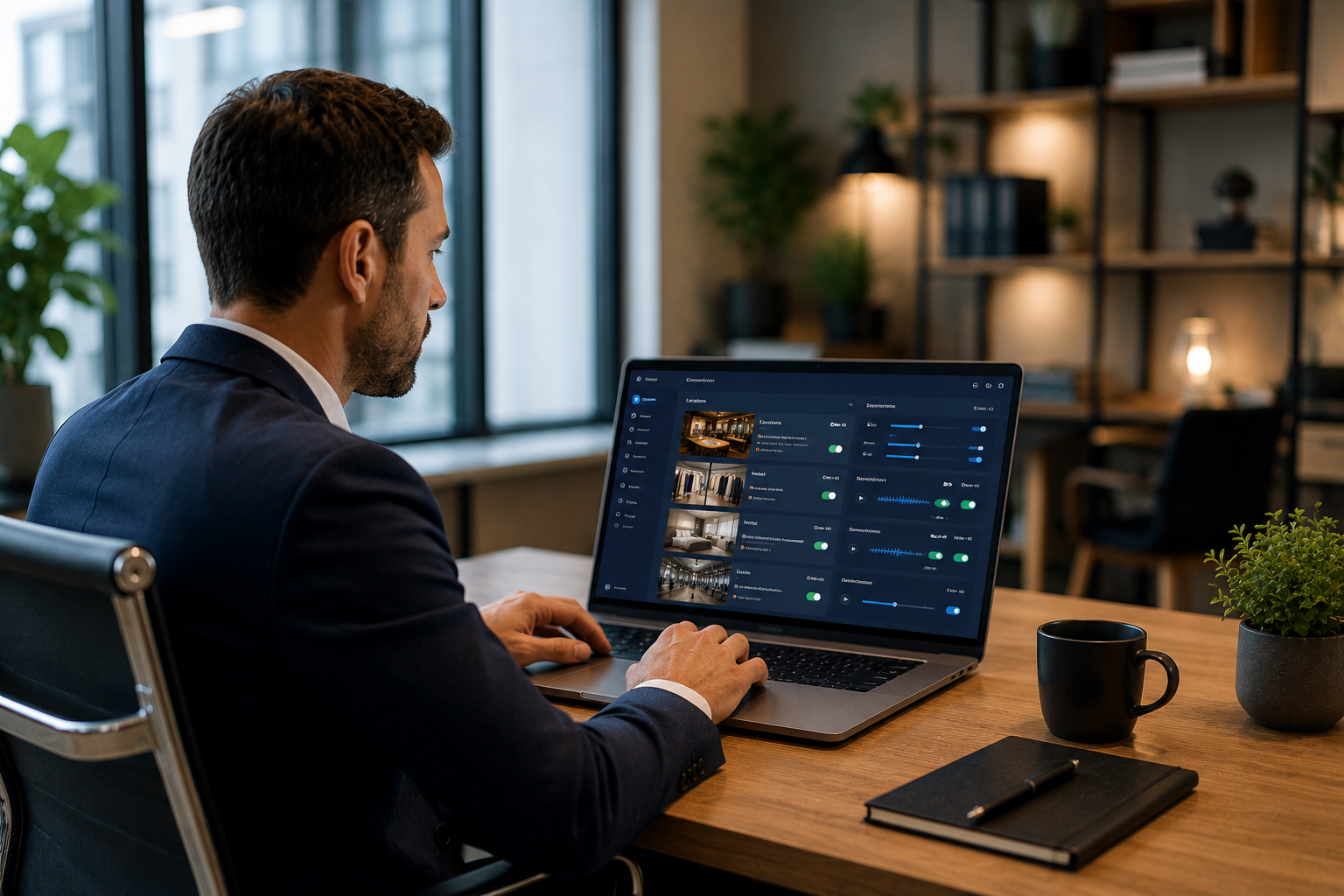
Instead of allowing every location to manage music independently, organizations can oversee playlists, schedules, and settings from a single dashboard.
This reduces administrative work while helping maintain consistent brand standards across every location.
Centralized management also simplifies onboarding new locations, updating seasonal playlists, and coordinating promotional campaigns.
Licensing Requirements Can Differ by Country
One of the most important things businesses should understand about music licensing is that requirements are not identical everywhere.
Music rights management has developed differently across markets, which means businesses operating in different countries may encounter different organizations, procedures, and licensing approaches.
For companies with a single location, these differences may be relatively simple to manage. However, for international businesses, franchises, and multi-location organizations, understanding local requirements becomes increasingly important.
A restaurant group operating in several countries, for example, may need to consider different licensing environments while maintaining a consistent customer experience across all locations.
The key challenge is that businesses usually want a simple operational solution. They do not want to spend significant time researching music rights administration when their primary focus is running their business.
This is one reason many companies choose business music platforms that simplify the process by providing tools designed specifically for commercial environments.
Why Local Requirements Matter
Businesses should always consider the rules that apply in the markets where they operate.
Factors that may influence music requirements include:
- the country where the business operates
- the type of commercial environment
- the way music is used
- the number of locations
- the size and structure of the organization
A small independent café and a global retail chain may both use background music, but their operational needs are completely different.
The café owner may need a simple, reliable music solution. A larger organization may require centralized administration, location management, and consistent brand standards across many sites.
Managing Music Across Different Markets
For businesses operating internationally, the challenge is balancing local requirements with global consistency.
Customers expect brands to feel familiar wherever they interact with them. A hotel guest, retail customer, or restaurant visitor should experience a recognizable atmosphere regardless of location.
Music can play an important role in creating that consistency.
Many growing businesses create centralized music strategies that define overall brand direction while allowing some flexibility for local preferences.
This approach helps organizations maintain control without making every location feel identical.
Country-Specific Licensing Resources
Because licensing requirements can vary between markets, businesses often benefit from reviewing information specific to their operating locations.
EasyMusicLicense provides dedicated resources for businesses researching music licensing in different countries:
- business music licensing in Germany
- business music licensing in France
- business music licensing in Spain
- business music licensing in Italy
Understanding local requirements helps businesses choose solutions that fit both their operational needs and the markets where they operate.
How to Choose the Right Business Music Provider
Selecting a business music provider is not only about finding access to songs. The right solution should support the way a business operates and help create a consistent customer experience.
Before choosing a platform, businesses should evaluate several important factors.
1. Commercial Music Support
The first consideration is whether the solution is designed specifically for business environments.
Commercial environments have different needs from personal listening. Businesses should look for platforms built around professional use cases rather than individual entertainment.
2. Ease of Management
Music should not become another complicated operational task.
A good business music platform should allow managers to create, update, and control music easily without requiring technical knowledge.
This is especially important for small businesses where owners and managers already handle many different responsibilities.
3. Multi-Location Capabilities
For businesses with multiple locations, centralized management is often one of the most valuable features.
Organizations should consider whether they need:
- centralized playlist control
- location-specific settings
- remote management
- consistent brand standards
- scalable deployment
A platform that works well for one location should also support future growth without requiring businesses to rebuild their entire music strategy.
4. Playlist Quality and Flexibility
Music selection remains important.
Businesses should look for platforms that provide professionally curated playlists suitable for different industries, moods, and customer experiences.
The best music strategy is rarely one playlist played all day. Different moments often require different energy levels and styles.
5. Scheduling and Automation
Automation helps businesses create more natural customer experiences.
Examples include:
- calmer music during opening hours
- higher-energy playlists during busy periods
- different music for evenings or weekends
- seasonal playlist updates
Scheduling reduces manual work and helps businesses maintain consistency throughout the day.
6. Future Business Needs
Businesses should consider not only what they need today but also how their requirements may change as they grow.
A platform that supports one small location may not be suitable for a company expanding into multiple sites.
Scalability, centralized administration, and additional audio capabilities can become increasingly important as organizations develop.
If you're comparing dedicated business music platforms, our guide to the best Soundtrack Your Brand alternatives explains the key features businesses should evaluate when choosing a commercial music solution.
Common Business Music Licensing Mistakes
Many businesses understand the importance of creating atmosphere but underestimate the complexity of managing music professionally.
Several common mistakes can reduce the effectiveness of a business music strategy.
Using Personal Streaming Services Without Understanding Commercial Requirements
One of the most common mistakes is assuming that a personal streaming subscription automatically covers business use.
Consumer platforms are designed around individual listening experiences, while commercial environments have different operational considerations.
Businesses should understand the requirements that apply in their market and choose solutions appropriate for their environment.
Choosing Music Based Only on Personal Preference
Owners and employees naturally have personal music preferences. However, the music played in a business should support customers and the brand rather than reflect only individual taste.
A playlist that an employee enjoys may not create the atmosphere a business wants customers to experience.
Allowing Every Location to Manage Music Independently
Independent control may seem convenient, but it often creates inconsistent customer experiences.
Multi-location businesses benefit from clear music guidelines and centralized management that helps every location maintain brand consistency.
Ignoring Customer Expectations
Different audiences respond differently to music.
A luxury hotel, fitness studio, family restaurant, and fashion retailer all have different customer expectations.
Successful businesses consider their audience, brand positioning, and environment when developing music strategies.
Failing to Update Playlists
Repeating the same music too frequently can make an environment feel outdated and reduce the impact of the customer experience.
Regular playlist updates help maintain freshness while preserving the overall brand atmosphere.
Playing the Same Playlist for Too Long
Even a well-designed playlist can become ineffective if customers hear the same songs repeatedly over long periods.
Businesses should regularly review their music strategy and refresh playlists to maintain a dynamic environment while still preserving their desired atmosphere.
Ignoring Volume Management
Volume is one of the most important parts of a successful business music strategy.
Music that is too quiet may fail to create the intended atmosphere, while music that is too loud can negatively affect conversations, customer comfort, and the overall experience.
The right volume depends on the type of business, the space, customer expectations, and the time of day.
Using Music Without a Clear Strategy
Many businesses treat music as something that simply needs to be playing in the background.
However, effective business music requires planning. The best results usually come from connecting music choices with brand identity, customer expectations, operating hours, and business objectives.
A clear strategy helps businesses use music intentionally rather than randomly.
How EasyMusicLicense Simplifies Business Music Licensing
Managing business music should not require complicated workflows or extensive technical knowledge.
EasyMusicLicense helps businesses simplify the process of managing licensed background music while creating better customer experiences across commercial environments.
The platform is designed for companies that want a practical way to manage music, playlists, and customer-facing audio from one place.

Key capabilities include:
- licensed background music for commercial environments
- business-focused music management
- professionally curated playlists
- simple subscription-based access
- playlist scheduling and management tools
- support for growing businesses and multiple locations
- AI-powered audio advertising capabilities
- centralized control over customer-facing audio
Instead of managing music and promotional audio separately, businesses can combine these activities within one modern audio platform.
This approach helps organizations reduce operational complexity while maintaining consistent customer experiences.
For small businesses, this means spending less time managing music manually. For larger organizations, it means having better visibility and control across multiple locations.
EasyMusicLicense is designed to support businesses at different stages of growth, from independent locations to expanding multi-location organizations.
Frequently Asked Questions
What is business music licensing?
Business music licensing refers to using music in commercial environments such as restaurants, retail stores, hotels, gyms, offices, and other businesses where customers, visitors, or employees can hear the music.
Why do businesses need music licensing?
Businesses use music as part of the customer experience. Because commercial environments differ from personal listening situations, companies should consider the licensing requirements and solutions that apply to their market.
Can I use Spotify for my business?
Businesses should review the terms of consumer streaming services and the applicable requirements in their country before using them in commercial environments. Many companies choose dedicated business music platforms because they are designed specifically for professional use.
What is the difference between personal and business music?
Personal music services are designed for individual listeners, while business music solutions focus on commercial environments and often include features such as centralized management, scheduling, and multi-location support.
Do licensing requirements differ between countries?
Yes. Music licensing requirements can vary depending on the country, local regulations, type of business, and how music is used.
What businesses commonly use licensed music?
Restaurants, cafés, retail stores, hotels, fitness clubs, salons, offices, franchises, and many other commercial businesses use licensed music solutions to support customer experiences.
How do I choose a business music provider?
Businesses should consider factors such as commercial music support, ease of management, playlist quality, scheduling tools, scalability, multi-location capabilities, and overall operational needs.
Can business music platforms manage multiple locations?
Many business music platforms provide centralized management tools that help organizations control music across multiple locations while maintaining brand consistency.
Can AI help businesses create audio advertising?
Modern AI audio tools can help businesses create professional promotional announcements, marketing messages, and customer communications more efficiently.
What is the difference between background music and a business audio platform?
Background music refers to the music customers hear in a space. A business audio platform can include additional tools for managing playlists, scheduling content, creating announcements, and controlling audio experiences at scale.
Conclusion
Business music licensing is an important part of creating professional customer experiences. Music influences atmosphere, brand perception, customer comfort, and the way people interact with commercial environments.
While consumer streaming services have made music easier to access than ever before, businesses often require solutions designed around commercial needs, operational efficiency, and long-term scalability.
The right business music solution depends on the size of the organization, the type of environment, the number of locations, and the experience a company wants to create for its customers.
By understanding how business music licensing works and choosing a platform that matches their operational needs, companies can transform music from a simple background element into a valuable part of their customer experience strategy.
Start managing licensed music for your business
Explore a modern platform for licensed background music, playlist management, and AI-powered audio advertising.
Start Free TrialGet your music license today
Start playing licensed music in your business in under 5 minutes.
View Pricing